
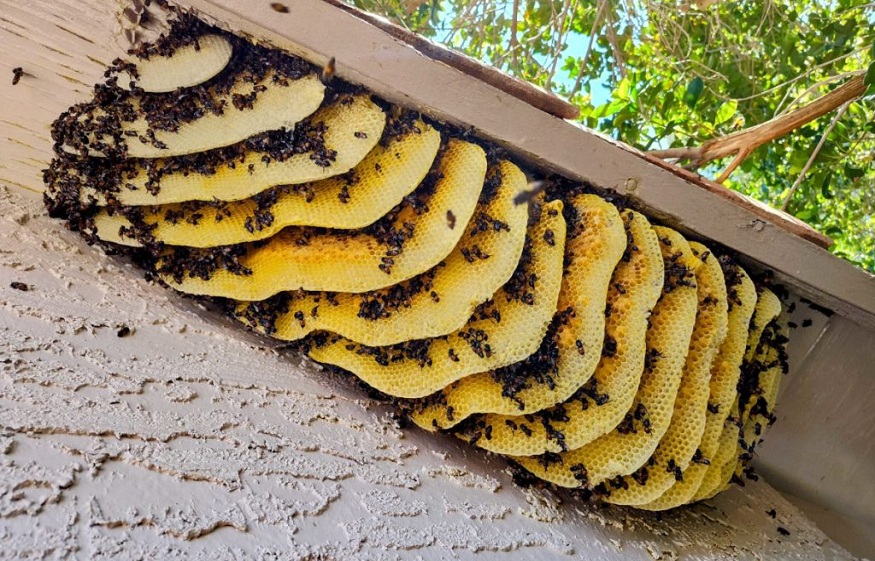
Maricopa County receives thousands of Africanized honey bee calls per year, and many of those cases can be traced back to one unforeseen place: the top of your house. Your Roof Vents Are a Thought Every Phoenix Homeowner Should Go Through, but as far as a bee colony in search of a new place to live, those holes are real estate. Avata Pest Control regularly responds to roof vent bee infestations that have been quietly growing for weeks before the homeowner notices anything at all.
Here, we explain which vents are at highest risk, how bees find them, and what this truly means for you.
Why Phoenix Homes Are a Prime Target for Bee Colonization
Phoenix’s desert climate, blistering summers, and mild winters (and the bee season from February through October) make for swarming most of the year. In cooler climes, where the colonies slow down so as not to freeze in winter snow, these hot-climate bees carry on longer. Africanized honey bees, now abundant in the area, are much more aggressive with occupancy of structural voids compared to their European counterparts. Your attic is not simply warm and dark; to them, it is perfect.
Read More: 9 Signs That You Need Professional Pest Solutions in Groveland
The Most Vulnerable Roof Vent Types Found in Phoenix Homes
Many of these common vent types throughout the Valley provide quick access for intrepid bee scouts:
- Turbine vents – When the turbine is stationary on a calm day with little running air to close the gaps then they become direct invitations
- Gable Vents – Wider mesh openings, frequently found in old Phoenix ranch-style homes with unreliable screening
- Ridge vents – Long continuous gaps across the roof, often built without fine mesh
- Soffit vents – Almost out of sight, these are easy to overlook during maintenance checks
- Static/box vents – Can be raw at the base where the cover is too worn or missing
How Bees Find and Choose a Roof Vent in Phoenix
No bees accidentally fly into your roof. Scout bees look for dark, enclosed, elevated cavities, exactly what roof vents provide. These places are all super easy to get to, what with Phoenix’s flat & low-slope rooflines being the rule instead of the exception around most of the Valley. Colonization risk is high during the spring swarm season, which peaks from March through May in the Phoenix metro area. A scout finds an appropriate cavity, informs the swarm, and soon hundreds of bees are moving in.
Signs a Hive Has Already Formed in Your Roof Vents
Catch it early. Watch for these signs:
- More bee activity around one of the vents than another, particularly in the morning hours
- Damaged coffin, dark stains, or wax along the edges of the coffins
- Buzzing sounds from the attic or ceiling
- The bumblebee follows the same sequential phased-in / out flight.
- A honey odour coming from inside the house, the comb melts more rapidly in Phoenix’s 100°F+ summers than it does in cooler climates
Read More: Seasonal Pest Control Guide for Reston Homeowners
Vent Proofing Options – What Works and What Does Not in Desert Conditions
The standard materials available at the hardware store typically fail quickly in the harsh UV and heat of Phoenix. Here is a quick breakdown:
| Solution | Effectiveness in Phoenix |
| 1/8″ hardware cloth | Highly durable and heat-resistant |
| Standard fiberglass mesh | Low degrades quickly under UV |
| Foam vent plugs | Low bees chew through; heat warps the material |
| Commercial vent covers with fine screens | High best option for turbine and ridge vents |
When to Call a Professional – And What to Expect
Removing an established hive is dangerous and can be illegal in Arizona without proper licensing, especially because Africanized bees are prevalent throughout Maricopa County. A professional licensed pest specialist will assess the area, harvest and remove the hive, and treat the void to ensure no future colonies are returning. Saela Pest Control has been finding homes for bees in Phoenix with their trained technicians who study local bee behavior at government-approved heights based on basic Arizona Department of Agriculture standards.