
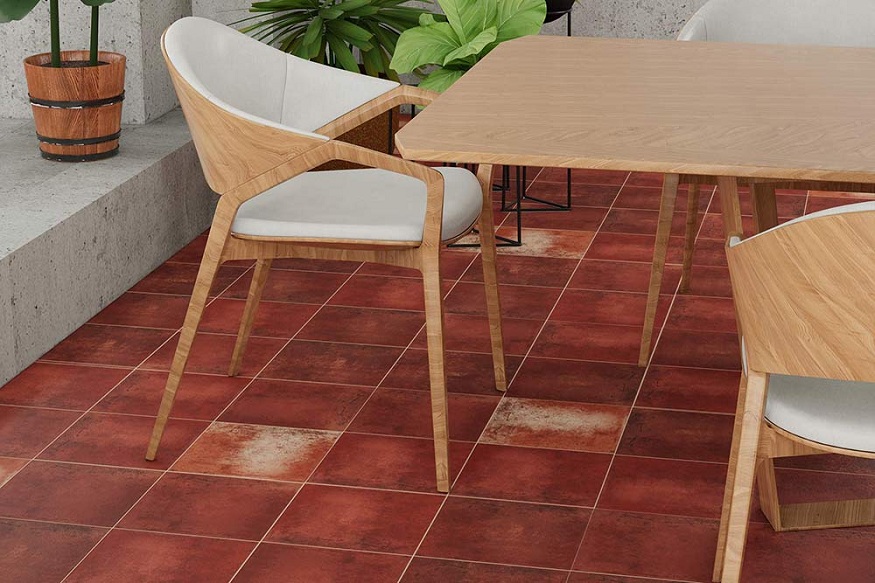
For years, tiles were treated as the final cosmetic decision in a home, something chosen after the “important” architectural work was complete. Pick a color, choose a finish, install it, move on. But modern living has exposed the weakness of that thinking.
That shift has quietly changed the role of tile design entirely.Tiles are no longer passive materials beneath furniture or behind kitchen counters. Their texture alters how sound travels. Their density influences heat retention. Their geometry affects perceived space. Even surface finish changes how natural light behaves through the day. In many modern projects, tiles are becoming less decoration and more spatial intelligence.
1. Unglazed Terracotta Porosity as a Passive Thermal Surface
Choosing ideal tiling systems goes beyond surface looks; it is about finding a material that lives with you. Authentic, unglazed terracotta brings that rare functional intelligence into a home with unique qualities that balance the indoor environment naturally. For example, their natural density acts as a highly effective thermal mass that comes handy in finishing sun-exposed interior walls. These tiles behave as a structural thermal reservoir.
The effect of quality Terracotta Tile is steady; it achieves a constant, rhythmic thermal regulation that maintains the equilibrium of an interior climate. The room simply feels more stable.
Read More: Natural Designs for Your Log Cabin That Blend in With the Wilderness
This becomes especially noticeable in:
- Homes flooded with afternoon sun
- Double-height living spaces
- Glass-heavy modern structures
- Open layouts prone to acoustic harshness
There is also a quieter benefit: matte terracotta naturally softens echoes, avoiding the hollow feel common in highly polished interiors.
2. Tile Format Modulation (Stick, Squoval and Slab Scaling) and Spatial Perception
A room can remain physically unchanged yet feel entirely different depending on tile format behavior beneath it.This is psychological in effect.Uniform tile sizing often creates visual flatness, no matter how premium the finish. Designers are now correcting this through controlled format transitions, from dense mosaics to elongated geometries to large slabs.
Smaller formats create visual compression. Larger formats create release.
For example:
- Narrow stick mosaics intensify entryways
- Elongated 6×3 squoval tiles guide directional movement
- Oversized 8×8 terracotta slabs open living areas
The eye reads these shifts as spatial expansion. No structural changes, and no added volume. Just format variation shaping perception.In smaller urban homes, this creates spatial depth without construction work.
3. Star and Cross Pattern Density as Floor-Based Spatial Zoning
Open-plan living solved light and connectivity but reduced spatial identity. Kitchens merge into lounges. Dining areas lose definition. Everything feels continuous, sometimes to the point of fatigue.This is where patterned systems like:
- Terracotta Star & Cross Tile (8×8)
- Black Terracotta Star and
- Cross Tile (8×8) become unexpectedly powerful.
Instead of separating spaces physically, pattern density establishes hierarchy.
A dense Star and Cross field beneath a dining area creates grounding, especially when used as a concentrated zone of Black Terracotta Star & Cross, while surrounding it with warmer formats like 4×8 Terracotta Tile, 8×8 Hexagon Terracotta, or even soft transitions into Moroccan Limestone or Calacatta Marble allows separation without blocking light.
The home begins to organize itself visually. No partitions, no decorative barriers. Just pattern logic guiding function.This becomes even more effective when star andcross tile fields are used as anchoring zones. For example, defining dining cores, kitchen thresholds, or central gathering points within large open layouts.
This is especially effective in:Minimalist residences, contemporary villas, boutique hospitality spaces, and luxury apartments with expansive floor plans. The floor stops behaving like background material and starts functioning as spatial infrastructure.
4. Contrast Tiling Systems for Light Behavior Control
A common mistake in modern interiors is treating brightness as quality. Highly reflective surfaces often look striking but feel harsh over time.When materials like octagon terracotta + marble checkerboard bundles (Octadot systems) are used together, something more controlled happens.
Matte terracotta absorbs intensity while honed marble reflects and redirects light deeper into the room. Together, they regulate visual balance.
Architects extend these systems into:
- Recessed niches
- Deep window reveals
- Reading corners
- Sculptural alcoves
The result is not stronger lighting, but controlled light behavior as spaces begin to feel naturally illuminated rather than artificially staged.That becomes environmental design, not decoration.
5. Tiling with Fired Clay in High Traffic Applications:Leveraging Patination
There is growing resistance to materials that only look perfect briefly.Highly polished synthetic surfaces often age poorly with scratches that show early, trends fading quickly, and quick decline of visual relevance.
Textured fired clay and terracotta behave differently, particularly in modular 4×8, 8×8, hexagon, and mosaic stick formats. These surfaces absorb time rather than resisting it. Continuous wear actively develops the surface profile, while natural variation builds aesthetic depth. The material matures rather than deteriorating.This matters particularly for:
- Long-term homeowners
- Boutique developers
- Hospitality investors
- Multi-generational living projects
True interior design luxury is no longer perfection, it is intentional long-term relevance; materials that remain intentional long after trends shift.
Read More: What to consider when choosing the right floating dock for your South Florida waterfront
In essence, modern interior design is no longer about static cosmetics, but about deploying active architectural structure that resolves real-world spatial, environmental, and acoustic conditions in silence. Such design thinking introduces control that operates from psychological perception to functional performance, where beauty becomes a baseline expectation rather than an efforted outcome.
However, to successfully transition a project from a basic finish into this level of spatial infrastructure, a deep partnership with a highly specialized, reputable supplier becomes essential.